Resources

This section of the website will be dedicated to collecting documents and information on the activities carried out by science centres and museums, as well as on the relevant thematic issues.

Feel free to contribute any information you feel might be interesting to other network members or website visitors. Send all relevant materials to us with a short explanation about the contents: info at ecsite.eu

Exhibits & exhibitions

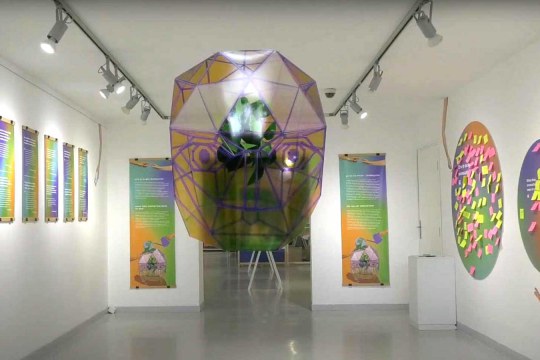
Extra is the definitive online tool for Europe’s community of professionals working with travelling science exhibitions.

Education & learning

Explainers in science centres and museums are highly qualified professionals who constantly work to adapt to the current needs of new generations of visitors. Explainers are flexible communicators, who know how to listen to their various audiences and mediate between them and the world of science. In order to do this effectively explainers need to continually develop their skills by searching for new ways to communicate both basic scientific principles and the latest findings and perspectives of science research.

Education & learning

It follows the previous work (Garnett, 2001). This review summarises and highlights research focused on the impact of science and technology museums, and a variety of science centres, (referred to collectively as Science & Discovery Centres). Comparable evidence from the informal learning sector as a whole including the arts, heritage and cultural sectors has also been included, where relevant.

Topics in science

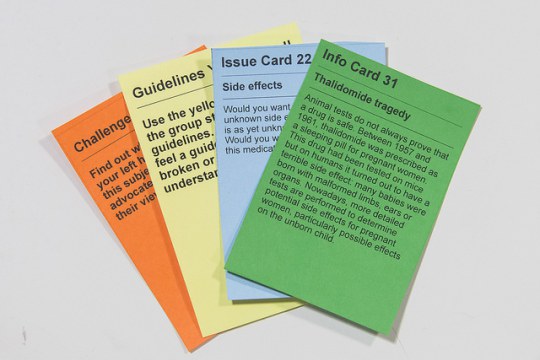
PlayDecide is a discussion game to talk in a simple and effective way about controversial issues.

Policy

This article argues a need for academics and governments attempting to “engage in engagement” to be clear about their goals and desired outcomes, and to consider whether or not the processes they facilitate are likely to meet these ends.

Policy

This paper draws upon case studies developed during the STAGE (‘Science, Technology and Governance in Europe’) project, sponsored by the European Commission. Qualitative case studies and country syntheses were prepared by a team of academic researchers, working across eight member states, drawing upon a broad range of expertise in the social sciences.